Most teams treat prompts like sticky notes. Then they wonder why AI output changes day to day.
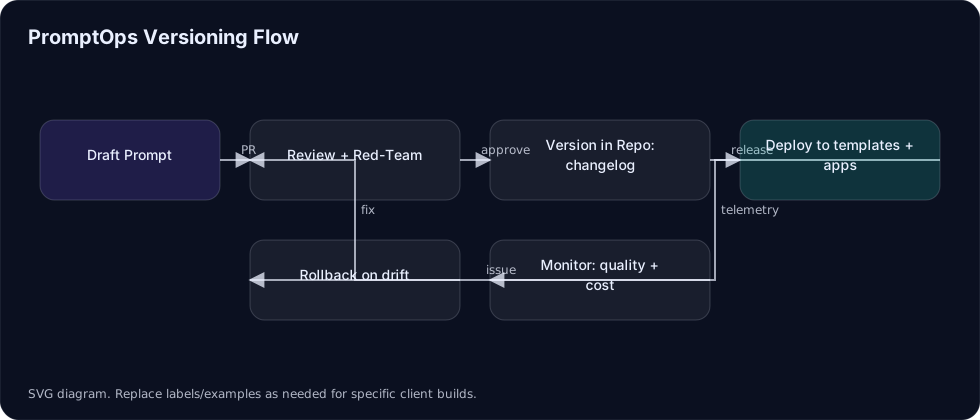
PromptOps is the discipline of managing prompts like software: versioned, tested, measured, and owned. If you’re using AI for briefs, emails, product copy, support replies, or reporting, PromptOps is how you keep quality high and costs sane.
What PromptOps actually is
- A shared prompt library (templates, not ad-hoc chats)
- Versioning and change control (who changed what, when, and why)
- Evaluation sets (a small batch of real examples you can re-run)
- Quality scorecards (brand voice, accuracy, completeness, compliance)
- Cost controls (context budgets, caching, model selection)
Why marketing teams need it first
Marketing has the highest volume of language work. That means tiny quality swings become huge. A slightly off brand email subject line is annoying. A thousand of them is a reputation.
- Brand voice drift is expensive to fix after the fact.
- Regulated industries need traceability and approvals.
- Creative teams need reusable patterns, not one-off magic tricks.
A practical PromptOps setup you can implement in a week
- Pick one workflow: e.g., SEO brief generation, ad copy drafts, or support macros.
- Create a prompt template with slots: audience, offer, tone, constraints, sources of truth.
- Define 10 real test cases (inputs + what “good” looks like).
- Add a simple checklist-based scorecard (1–5) for brand, accuracy, usefulness.
- Run A/B: current approach vs. template prompt. Keep the winner.
- Lock the prompt behind a lightweight approval process for edits.
Prompt template example
You are the Brand Copy Assistant for {brand}.
Goal: {goal}
Audience: {audience}
Voice rules (must follow):
- Tone: {tone}
- Never use these phrases: {banned_phrases}
- Always include: {required_elements}

Facts you may use (source of truth):
{facts}

Task:
Create {deliverable_type} with:
- 3 options
- 1 recommended option + rationale
- A short checklist for QA

Constraints:
- Reading level: {reading_level}
- Do not claim numbers unless provided in facts
Common failure modes (and fixes)
- Context bloat: prompts keep growing. Fix with tighter slots and curated facts.
- Hallucinated numbers: ban metrics unless explicitly provided.
- Inconsistent tone: create a brand voice rubric and score it.
- Hidden costs: track tokens and add a “budget” field to workflows.
The tiny metric that predicts success
Measure cycle time. If PromptOps makes work faster and clearer, adoption sticks. If it adds friction, people go back to copy/paste chaos.
Want a simple next step? Start with a single prompt library, a 10-example eval set, and a monthly review cadence. You’ll be shocked how fast output stabilizes.