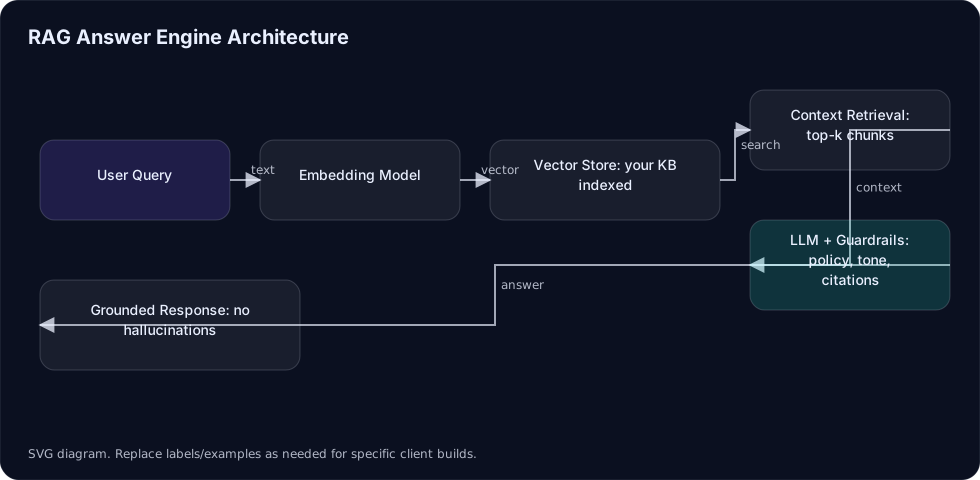
Most ‘AI chatbots’ fail because they answer confidently from nowhere. RAG (retrieval augmented generation) fixes that by grounding answers in your actual docs.
This post shows a safe way to deploy a brand-accurate answer engine for support and sales.
What to index (and what to avoid)
- Index: policies, shipping timelines, product manuals, FAQs, approved claims, internal SOPs.
- Avoid: personal data, anything not approved for customer use, unreviewed internal opinions.
A safe answer pattern
- Retrieve: fetch the most relevant snippets from your knowledge base.
- Compose: generate an answer that cites those snippets (internally).
- Constrain: forbid answers that aren’t supported by retrieved sources.
- Escalate: if confidence is low, route to a human with context.
The overlooked step: canonical policy snippets
Create short, authoritative policy snippets (returns, warranties, shipping). If these are clean, the bot stays clean. If these are messy, the bot becomes a chaos amplifier.
Example refusal rule
If the retrieved sources do not contain the answer:
- Say you don't have enough information
- Ask one clarifying question
- Offer to connect the customer with support
Never guess. Never invent policies.
Measuring success
- Deflection rate (tickets avoided)
- Customer satisfaction on bot interactions
- Hallucination incidents (should trend to near-zero)
- Time-to-resolution for escalations
A RAG assistant is a trust product. Build it like one: grounded answers, clear escalation, and continuous improvement.